

Dutch Gambling Regulator Works With Google on EU-Wide List to Curb Illegal Casino Ads.

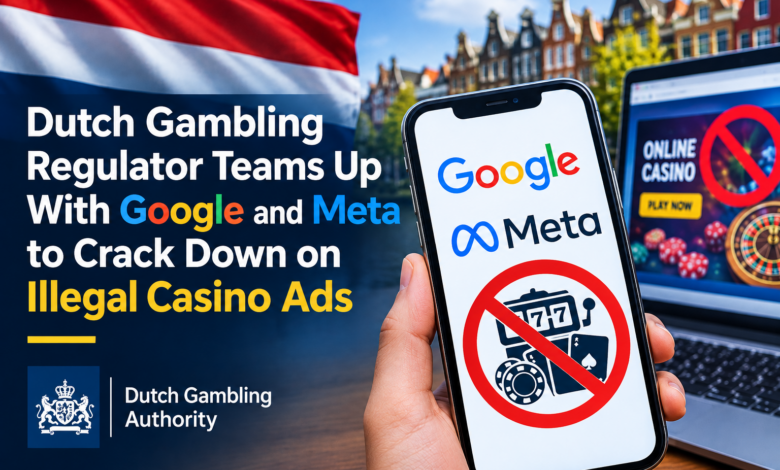
The Netherlands’ gambling regulator is working with Google to develop a European Union-wide register of licensed gambling operators. The proposed list could help the technology company identify and block unauthorised gambling advertisers across its platforms.
The initiative forms part of wider discussions involving Google, Meta and several European gambling authorities. However, the Dutch regulator has warned that cooperation may not be enough. If voluntary measures fail, the Kansspelautoriteit (Ksa) is prepared to consider legal action against major technology companies.
Ksa chairman Michel Groothuizen revealed the discussions in a commentary published on 14 October 2026. He outlined the regulator’s plans to tackle illegal online gambling advertising and strengthen enforcement.
The strategy signals a shift away from relying mainly on fines against offshore operators. Instead, the regulator wants to target the digital platforms and payment services that help unlicensed gambling businesses reach consumers.


Google and Meta Discuss Illegal Gambling Advertising With European Regulators
In spring 2026, representatives from the Ksa and several European gambling regulators travelled to Dublin to meet Google and Meta. Both technology companies maintain their European headquarters in the Irish capital. The discussions centred on reducing the visibility of illegal gambling operators. Regulators also explored ways to prevent unauthorised businesses from advertising to European consumers through major online platforms.
One outcome was the establishment of a joint task force.
A key project involves developing a register of gambling operators authorised to provide services within the EU. Regulators are working with Google on a list that could help distinguish licensed businesses from those advertising without the required permissions.
The register would give Google a clearer reference point when assessing gambling advertisers. It could also make it easier to identify and exclude operators that lack the necessary authorisation.However, the project remains under development. The Ksa has not announced an implementation date.
A coordinated register could also strengthen enforcement beyond the Netherlands. Shared regulatory information may make it harder for offshore operators to exploit differences between national enforcement systems.However, gambling licences and advertising rules vary across European countries. A licence issued in one member state does not automatically authorise an operator to advertise its services throughout the EU.
The effectiveness of the register will therefore depend on how it accommodates national licensing rules and advertising restrictions.
Illegal Gambling Accounts for Around Half of Dutch Online Betting Spending
The initiative comes five years after the Netherlands launched its regulated online gambling market in October 2021.Despite progress in directing players towards licensed operators, illegal gambling remains a significant challenge.
According to figures cited by Groothuizen, approximately 90% of Dutch online gamblers use licensed operators exclusively. Yet illegal websites continue to account for around half of online gambling spending.
Key figures cited by the Ksa chairman on 14 October 2026:
- Around 90%: Dutch online gamblers who use licensed operators exclusively.
- Around 50%: Share of online gambling spending attributed to illegal operators.
The figures highlight a gap between player participation and the distribution of gambling expenditure.
Although most Dutch online gamblers reportedly use regulated websites, illegal operators continue to capture a substantial share of the market’s spending.
This distinction is important when assessing the effectiveness of gambling regulation. The proportion of players using licensed platforms does not necessarily reflect the amount of money entering the legal market.
A smaller group of consumers using illegal websites could account for a disproportionate share of total spending. However, the figures cited in the commentary do not establish the precise distribution.
For the Ksa, the continued financial strength of illegal operators reinforces the need for stronger enforcement.
Why the Ksa Is Rethinking Its Approach to Illegal Gambling
For years, the Dutch regulator has relied on financial penalties to deter gambling operators that operate without the required licences. However, issuing fines does not always result in meaningful behavioural changes. Collecting penalties from offshore businesses can also be difficult.
Groothuizen acknowledged that enforcement decisions may establish legal boundaries without necessarily stopping illegal operators from serving Dutch consumers. Over roughly the past 18 months, the Ksa has increasingly focused on disrupting the infrastructure that supports unauthorised gambling.
This includes making illegal websites harder to find through online searches and targeting payment services that facilitate their operations. Search engines, social media companies and payment providers are consequently becoming more important to the regulator’s enforcement strategy.
The approach also aligns with the Ksa’s 2026 supervisory priorities, which include illegal gambling, player protection and advertising oversight.
By targeting the services that connect illegal operators with consumers, the regulator hopes to make unauthorised gambling more difficult to promote and access.
Dutch Regulator Warns Google and Meta of Possible Legal Action
Despite ongoing discussions with Google and Meta, the Ksa has not ruled out legal action.
Groothuizen argues that major technology companies earn substantial revenue from online advertising, including promotions associated with illegal gambling. This can create tensions between commercial interests and regulatory objectives.
The Ksa is particularly concerned about gambling advertisements reaching vulnerable consumers.
According to the chairman, illegal gambling promotions appear across social media and can target minors and people who have registered with gambling self-exclusion systems. He indicated that the scale of the problem could run into thousands of advertisements, potentially considerably more.
The regulator is considering Dutch legislation and the EU’s Digital Services Act as potential legal avenues for addressing illegal gambling advertising.
However, the division of enforcement responsibilities is important.
The Ksa can pursue matters within its national regulatory powers. Enforcement against very large online platforms under relevant provisions of the Digital Services Act falls within the European Commission’s responsibilities. The Dutch regulator can provide evidence and support a case, but it cannot independently impose European Commission penalties under the legislation.
Groothuizen also highlighted the challenges of taking major technology companies to court.
Read Also: Dutch Gambling Authority Raises Concerns Over 711 Withdrawals.
Legal proceedings could involve extensive disputes over evidence, significant costs and appeals lasting several years. A final judgment could take as long as five years, with no guarantee that the regulator would win.
For this reason, the Ksa views negotiated changes as a potentially faster way to restrict illegal gambling advertisements.However, its willingness to consider litigation remains part of the enforcement strategy.
Dutch Politicians Call for Stronger Action Against Online Platforms
The Ksa’s preference for cooperation has not satisfied everyone involved in the Dutch gambling debate.
During a parliamentary committee debate in September 2026, VVD politician Bart Bikkers called for tougher enforcement against major online platforms involved in distributing illegal gambling advertisements.
Gambling lawyer Justin Franssen has also supported a stronger regulatory response towards large technology companies.Their positions reflect a wider debate over whether regulators should continue negotiating with platforms or move more quickly towards sanctions.
Groothuizen has taken a more cautious approach. He argues that launching legal proceedings without adequate preparation could weaken the regulator’s position if a court rejects its arguments.
The Ksa also faces a practical challenge. Technology companies operate across multiple jurisdictions, while gambling rules differ between countries. The regulator is therefore pursuing cooperation while preparing for the possibility of enforcement proceedings.
This dual approach allows the Ksa to seek immediate changes through discussions while retaining the option of legal action if those efforts fail.
What an EU-Wide Gambling Licence Register Could Mean
The proposed register is one of the most significant developments disclosed by the Dutch regulator.
If implemented successfully, it could help Google verify gambling advertisers against official licensing information. This would potentially reduce the need for repeated complaints, manual investigations and individual takedown requests.
The initiative could also provide a framework for closer cooperation between national gambling regulators and digital advertising companies.
However, several questions remain unanswered.
The Ksa has not explained how frequently the register would be updated or how it would account for national advertising restrictions. It is also unclear whether Meta will adopt a comparable verification system.
There is no confirmed implementation timetable, and the regulator has not presented evidence that the proposed initiative has already reduced illegal gambling advertising. These details will be critical in determining whether the register becomes an effective enforcement mechanism or remains primarily a framework for cooperation.
For gambling operators and affiliates, the initiative could signal closer scrutiny of advertising permissions and platform compliance. Businesses seeking to advertise across European markets may need to pay particular attention to country-specific licensing requirements.
The immediate priority for the Ksa is to secure meaningful changes from Google and Meta. At the same time, it is preparing for possible legal proceedings if voluntary cooperation falls short.
Groothuizen has made clear that the regulator may take a major technology platform to court if the measures prove insufficient.
The next test will be whether Google and Meta introduce effective safeguards against illegal gambling advertisements before the dispute escalates into a legal battle.