


DGOJ Temporarily Bans Polymarket and Kalshi for Illegal Activities

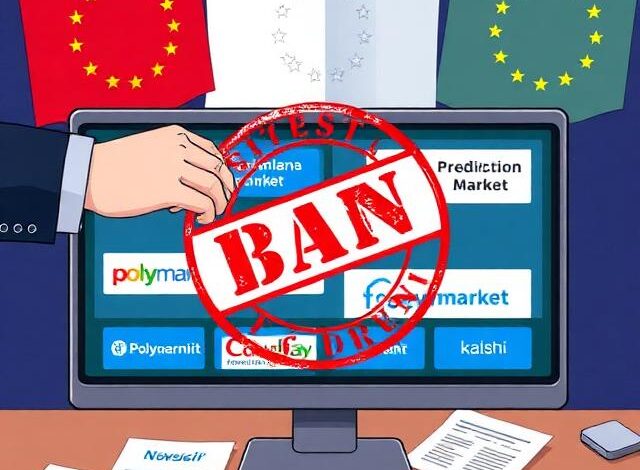
Spain’s gambling authority, the Dirección General de Ordenación del Juego (DGOJ), has taken a significant step by imposing a temporary ban on two major prediction market platforms, Polymarket and Kalshi. The suspension is set to last between three and four months, during which the regulator will conduct a formal investigation into their operations. This move marks a cautious approach as authorities scrutinize these platforms’ compliance with local laws.
The DGOJ, operating under the Ministry for Social Rights, Consumer Affairs and Agenda 2030, explained that both platforms have been offering services within Spain without securing the necessary administrative licenses mandated by the country’s gambling legislation. The official sanctions have been published in the Boletín Oficial del Estado, signaling the start of procedural steps that could lead to further action. It is expected that a final decision will take several months, giving the platforms time to respond whether by seeking proper licensing, challenging their classification, or modifying their services to meet regulatory standards.
The regulator emphasized that prediction markets are viewed as a form of gambling because they involve “placing bets on uncertain future outcomes.” As such, operators are required to hold specific licenses to operate legally within Spain. The DGOJ also pointed out multiple consumer protection issues found on unauthorized platforms, including the lack of robust identity verification, inadequate controls to prevent minors and self-excluded individuals from accessing the services, and insufficient oversight mechanisms.
Efforts by the DGOJ to contact Polymarket and Kalshi at their known foreign addresses have so far been unsuccessful, highlighting the challenge regulators face when dealing with international platforms.




Across Europe, regulators continue to grapple with how to classify and oversee prediction markets. The approaches differ widely some jurisdictions treat them as gambling, while others consider them financial instruments or commodities. Spain is not alone in its crackdown; France banned Polymarket in 2024, arguing that the platform’s offerings likely violated French law. Other European countries such as Germany, Belgium, Portugal, Switzerland, Romania, the Netherlands, and Poland have also moved to block access to prediction sites like Polymarket.
Read also: India Restricts Access to Polymarket Platform
Meanwhile, some regions are adopting a more regulatory-friendly stance. Gibraltar and Malta are exploring ways to oversee prediction markets more effectively. Malta’s Economy Minister, Silvio Schembri, stated earlier this year that the country is “actively exploring the emerging field of prediction markets,” with an eye toward establishing a clear regulatory framework. Gibraltar recently licensed its first prediction market operator, signaling a shift towards regulated growth.
The debate continues over whether these platforms should be classified as forecasting tools or financial products, versus their treatment under gambling laws aimed at protecting consumers. As regulators debate, the future of prediction markets in Europe remains uncertain, with ongoing discussions about how best to balance innovation with consumer safety.