

European Regulatory Agencies Unite in Action Against Prediction Market Activities

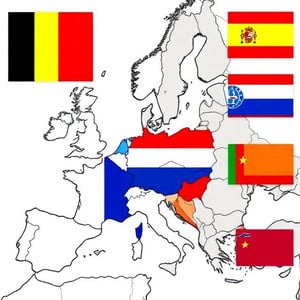
Several European nations, including Belgium, France, Germany, Italy, the Netherlands, Poland, Portugal, and Spain, have taken steps to oppose the expansion of prediction markets. Notably, authorities in these regions have already moved to block access to well-known operators such as Polymarket and Kalshi.
On Wednesday, nine European gambling regulatory agencies announced a coordinated effort to clamp down on unlicensed prediction market platforms operating across the continent. This initiative aligns with the upcoming 2026 FIFA World Cup, as regulators from Belgium, France, Germany, Italy, the Netherlands, Poland, Portugal, Spain, and Switzerland committed to increased cross-border cooperation aimed at tightening oversight of this rapidly growing sector.
While in the United States there remains an ongoing debate over whether prediction markets should be classified as gambling or financial instruments, in Europe, these platforms and their operators are broadly regarded as unlicensed gambling activities.
In a joint statement, the European authorities expressed their concern about prediction markets, platforms that allow users to place bets on the outcomes of future events. They underscored various risks to consumers and market integrity, particularly emphasizing the dangers posed by platforms operating without local gambling licenses. A primary worry is the accessibility of these platforms around the clock, with no mandatory betting limits or cooling-off periods in place. This situation, the authorities noted, heightens the risk of gambling-related harm, especially among younger demographics. Concerns also extend to verification procedures, as weak age and identity checks on unlicensed platforms further challenge safeguarding efforts.
The regulators specifically cautioned sports federations, leagues, and clubs to thoroughly verify the legal status of any partners involved in prediction markets before entering into sponsorship or commercial arrangements. The nine bodies committed to enhancing information exchange and sharing expertise to better enforce compliance both during and after the World Cup. This will involve coordinated monitoring of advertising practices and the integrity of betting activities. Additionally, they plan to ramp up social media campaigns to promote safer gambling practices and implement regulatory actions ranging from formal warnings to sanctions against non-compliant operators.




Potential enforcement measures include service blocking, fines, restrictions on advertising, or account freezes particularly targeting operators relying on offshore or decentralized cryptocurrency licenses. Recently, Spain’s Dirección General de Ordenación del Juego (DGOJ) ordered a temporary suspension of Polymarket and Kalshi. According to their statement, both platforms were providing services within Spain without holding the required administrative licenses mandated by national gambling laws. Similar geoblocking measures have been implemented in France and the Netherlands.
Read Also: Gaming Corps partners with SpinCore Group to bring content to Hard Rock Casino NL
Prediction markets have experienced significant growth in recent years, driven by innovations in cryptocurrency, social sharing mechanisms, and trading-like features. Unlike traditional sportsbooks, some platforms enable fractional stakes and cover a wide range of events beyond sports. Their real-time price movements often resemble financial trading, blurring the lines between gambling and investment.
Europe’s regulatory landscape remains fragmented, complicating oversight efforts. Gibraltar, for instance, recently licensed ADI Predictstreet as Europe’s first prediction market operator, aiming to bolster Gibraltar’s gambling economy amidst the recent increase in UK remote gaming duties. This operator launched just before the start of the World Cup and quickly became FIFA’s official prediction market partner for the tournament. Malta was notably absent from the joint statement; however, Malta’s economy minister, Silvio Schembri, stated in March that the country was “actively exploring the emerging field of prediction markets, an area experiencing rapid global momentum which presents significant opportunities for innovation.”